Diwali: meaning and preparation
A simple preparation guide for lights, worship and gathering with family. Practices vary by region and household.
दीपावली: परिचय और तैयारी
Save your preparation checklist · तैयारी सूची सहेजेंDates depend on location and tradition. Check the local observance; calculation previews are not confirmed ritual dates.
A simple household lamp offering remembering Ganesha, Lakshmi and Saraswati
Simple editorial guidance · Qualified religious review pending. Follow your household tradition.
Basics for this simple lamp offering
This is not a mandatory list for every Hindu ritual. Choose quantities for your household and method.
Specific materials & decoration
- Roli or kumkum, akshata, incense, a kalash or coins if used in your household method
- A book for remembering Saraswati; business ledgers if part of your Sharda-puja tradition
- Rangoli, toran and additional lamps are optional decorations
If an item is unavailable, confirm an appropriate alternative with a knowledgeable family member or priest. Expensive purchases are not the purpose of this guidance.
Lakshmi–Ganesha puja for Diwali
Gather the family for a lamp offering and the worship of Ganesha and Lakshmi. This guide describes a simple household practice. The order and offerings differ between families and traditions; follow the custom you know.
Check a verified date for your city and the current year. A muhurta for another place is not automatically your local time. This guide does not prescribe a universal time for worship.
A small preparation list
This is a practical starter list for the household offering described here, not a mandatory list for every Hindu ceremony. Prepare with the materials available and the custom followed at home.
- A clean space and an image, murti or printed pana of Ganesha and Lakshmi
- A lamp, wick and a little suitable oil or ghee
- Clean water, a small vessel, spoon and plate
- A few flowers or akshata if used in your household
- Fruit or a simple food offering prepared at home
Additional materials by tradition
- Kumkum, sandalwood paste, incense and sacred thread where these are customary.
- A kalash, coconut, betel leaves and nut, panchamrita or cloth when required by the fuller ceremony you follow.
- Books or account ledgers for Saraswati remembrance or Sharda pujan, if this belongs to your tradition.
- Rangoli, a toran, coins and extra lamps depend on household custom or decoration. Expensive purchases are not a condition of this simple offering.
The simple sequence at a glance
- Prepare the space
Wash and wear clean clothing. Place the image, murti or pana securely and arrange the water, flowers, lamp and food offering.
- Light the lamp
Set the lamp on a stable tray away from paper, curtains and fabric. An adult should attend to the flame when children are nearby.
- Set the intention and remember Ganesha
Pause to express gratitude and the purpose of the worship. Begin with a salutation to Ganesha and the flower offering used in your tradition. A short traditional salutation appears below.
- Honour Lakshmi
Remember Lakshmi and bow. Offer the kumkum or sandalwood paste, rice and flowers customary in your household. Keep any water offering in its vessel rather than wetting a printed image.
- Include Saraswati where customary
Where Sharda pujan is observed, place books or ledgers before the shrine and pray for learning, discernment and integrity in work. This is not a required addition for every household.
- Offer naivedya
Offer clean water, fruit or the simple food you have prepared. Follow your own tradition when choosing any particular festive dish or dietary practice.
- Read, perform aarti and pray
Use the aarti or prayer familiar to your family, or read the short salutations below. Conclude with a prayer in your own words for the well-being of the family and others.
- Conclude and share prasad
Bow, ask forgiveness for mistakes in the worship, and share the prasad. Put the materials away while keeping any burning lamp attended.
Keep water, milk and panchamrita off paper or printed artwork. Bathing a murti depends on its material and your ritual practice. This is practical household guidance; it does not set out a homa, installation rite or the complete mantra system of a particular tradition.
Lakshmi puja in detail: the offerings
The short sequence above gives an overview. The sections below explain the offerings to Lakshmi in more detail. An upachara is an act of reverent service during worship. These are practical reading groups, not a claim that every tradition uses the same sixteen-item list. Follow your learned practice where its order or offerings differ.
Use the starter list above when preparing a modest household offering. Madhuparka, panchamrita, bathing, clothing, ornaments and dakshina belong to fuller practices and depend on the custom you follow. Their explanations below do not create a requirement to buy every item.
- Dhyana and avahana — remembrance and invocation
After remembering Ganesha, sit calmly before Lakshmi and bring your attention to her presence. Offer a welcome in your own words and ask that your worship be accepted. The short Mahalakshmi salutation below can accompany this.
- Asana — a seat of honour
Offer a seat of honour by placing a flower before the image or murti. A printed pana can remain securely in its place; the offering expresses the welcome rather than requiring it to be moved.
- Padya — water for the feet
Offer a small amount of water in honour of the feet. When worshipping with a picture or pana, place the water in a separate receiving dish in front of it, without wetting the paper.
- Arghya — an honouring water offering
Make a fresh, small water offering as arghya. In the sequence described here, it honours the hands. The water can go into the receiving dish, while you distinguish its purpose from the preceding offering.
- Achamaniya — water for the mouth
Offer a little clean water for the mouth into the receiving dish. This is an offering to the deity, distinct from any personal achamana performed by the worshipper.
- Madhuparka and panchamrita · an additional offering by tradition
Fuller practices may include these as separate offerings. Madhuparka uses honey, ghee and yoghurt; panchamrita combines milk, yoghurt, ghee, sugar and honey. Prepare a small portion in a clean bowl if this belongs to your practice. Keep these liquids off printed artwork.
- Snana and abhisheka — bathing · an additional offering by tradition
Bathe a murti only when its material, finish and the practice you follow permit it. For a picture or pana, keep the water in a separate vessel and make the offering symbolically. Dry a bathed murti carefully and return it to a stable position before continuing.
- Vastra and adornment · an additional offering by tradition
Where customary, offer a clean cloth or dress the murti appropriately. Some fuller ceremonies also offer a neck ornament and other adornments. A cloth can rest beside a picture. This household guide does not require new jewellery, gold or costly clothing.
- Gandha and akshata
Offer the sandalwood paste, kumkum or roli used in your household, followed by a little akshata. Apply substances only to a suitable murti surface. With printed artwork, a small plate beside the image keeps the offering from staining it.
- Flowers and nama-archana
Offer flowers and, where customary and available, a garland. The short Mahalakshmi salutation below can accompany a flower offering. Use a learned anga-puja or namavali if it is part of your practice; this household guide sets no required repetition count.
- Dhupa — incense
If incense is part of your practice, offer it before the shrine and return it to a secure holder. Where smoke causes discomfort, keep the household worship simple rather than adding more incense.
- Dipa — the lamp offering
Present the light of the lamp already prepared. Hold its tray steadily, keeping the flame clear of the image, fabric and flowers, then set it down safely. This simple offering does not depend on buying a particular lamp or additional lights.
- Naivedya and water
Place fruit or the food prepared at home on a clean plate and offer it as naivedya, with clean drinking water in a separate vessel. Follow family custom for particular dishes or food rules; a large feast is not a condition of the modest offering described here.
- Dakshina, where customary · an additional offering by tradition
If your ceremony includes dakshina, set aside an amount within your means and give it according to your practice after the worship. Keep money separate from food. No payment, fee or fixed amount is prescribed by this guide.
- Stuti — praise and prayer
Read a Lakshmi prayer or stuti familiar to your household. The short salutations and original prayer below provide an accessible option if you do not know a longer text. Playing a particular song or recording is not required.
- Aarti / mangala-nirajana
Offer aarti with the lamp tray while reciting or singing the aarti known to your family. Keep the movement controlled and the flame attended. The family can bow together; children should not handle a burning tray alone.
- Pushpanjali — flowers with joined hands
Hold a few flowers in joined hands, offer gratitude and pray for the well-being of others, then place the flowers before the shrine. Use the prayer learned in your tradition, or accompany the offering with the short salutation below.
- Pradakshina and namaskara
Make the circumambulation customary in your practice where space and mobility allow, then bow. A seated salutation is available when walking is difficult or space is limited. Keep the path clear of the lamp and offering vessels.
- Forgiveness, dedication and prasad
Ask forgiveness for mistakes in your own words and dedicate the worship. Pray for the family and others, then share the prasad using clean serving vessels. Put the materials away while continuing to supervise any burning lamp.
Short traditional salutations
Choose the recitations that belong to your practice. This guide does not prescribe a required repetition count.
Salutation to Ganapati
ॐ नमस्ते गणपतये।
A salutation to Ganapati.
A short passage from the opening of the Ganapati Atharvashirsha.
Read the complete Ganapati Atharvashirsha →Salutation to Mahalakshmi
ॐ श्रीमहालक्ष्म्यै नमः।
A salutation to Shri Mahalakshmi.
A traditional name salutation, rather than the complete liturgy of Lakshmi puja.
A prayer in your own words
May we act with understanding, integrity, gratitude and care for one another. May the fruits of our work contribute to the well-being of others.
This prayer was written for this guide; it is not a quotation from scripture.
What if some materials are unavailable?
Bhagavad Gita 9.26 mentions a leaf, a flower, fruit and water offered with devotion. Read the verse in its context and prepare with what is available, without treating an expensive purchase as essential.
Read Bhagavad Gita 9.26 →References and editorial status
This is original editorial guidance, not a reproduction of the institutions’ articles, translations or illustrations. Qualified religious review is pending. The references describe particular traditions. The guide itself is available here without opening an external page.
Your checklist stays in this browser. This guide does not prescribe a puja muhurat.
दीपावली पर लक्ष्मी–गणेश पूजन
दीप जलाकर, गणेशजी और लक्ष्मीजी का स्मरण करके परिवार के साथ पूजन करें। यह घर पर सरल पूजन की मार्गदर्शिका है। परिवार, क्षेत्र और सम्प्रदाय के अनुसार क्रम और अर्पण बदल सकते हैं; अपनी पारिवारिक रीति को प्राथमिकता दें।
अपने शहर और वर्तमान वर्ष की जाँची हुई तिथि देखें। दूसरे शहर का मुहूर्त अपने यहाँ लागू न मानें। इस मार्गदर्शिका में कोई सार्वभौमिक पूजा-समय घोषित नहीं किया गया है।
सरल पूजन की मूल सामग्री
यह इस सरल घरेलू पूजन की व्यावहारिक सूची है, प्रत्येक हिन्दू विधि की अनिवार्य सामग्री नहीं। जो उपलब्ध हो, उससे अपनी रीति के अनुसार तैयारी करें।
- स्वच्छ स्थान; गणेशजी और लक्ष्मीजी का चित्र, मूर्ति या छपा हुआ पाना
- दीपक, बत्ती और थोड़ा उपयुक्त तेल या घी
- साफ जल, छोटा पात्र, चम्मच और थाली
- थोड़े फूल या अपनी रीति के अनुसार अक्षत
- फल या घर में बना सादा नैवेद्य
परम्परा के अनुसार अतिरिक्त सामग्री
- रोली / कुमकुम, चन्दन, धूप और मौली—जैसा आपके घर में प्रचलित हो।
- कलश, नारियल, पान-सुपारी, पंचामृत और वस्त्र—विस्तृत विधि में आवश्यक हों तो अलग तैयार करें।
- सरस्वती-स्मरण या शारदा-पूजन के लिए पुस्तकें और बहीखाता, यदि आपकी परम्परा में हो।
- रंगोली, तोरण, सिक्के और अतिरिक्त दीप सजावट या पारिवारिक प्रथा के अनुसार हैं। महँगी वस्तुएँ खरीदना इस सरल पूजन की शर्त नहीं है।
सरल पूजन: एक नज़र में
- स्थान और सामग्री तैयार करें
हाथ-पैर धोकर स्वच्छ वस्त्र पहनें। चित्र, मूर्ति या पाना स्थिर स्थान पर रखें। जल, फूल, दीप और नैवेद्य सामने सजा लें।
- दीप प्रज्वलित करें
दीपक स्थिर थाली में जलाएँ। कागज़, पर्दे और कपड़े लौ से दूर रखें। छोटे बच्चों के पास दीपक की देखरेख कोई बड़ा करे।
- संकल्प और गणेश-स्मरण
मन को एकाग्र करके पूजन का उद्देश्य रखें—कृतज्ञता, सद्बुद्धि, सदाचार और परिवार का मंगल। गणेशजी को प्रणाम करें और अपनी रीति के अनुसार फूल अर्पित करें। नीचे छोटा गणपति-नमन भी दिया है।
- लक्ष्मीजी का ध्यान और अर्पण
लक्ष्मीजी का ध्यान करके प्रणाम करें। अपनी विधि के अनुसार रोली या चन्दन, अक्षत और फूल अर्पित करें। जल का अर्पण पात्र में करें; छपे पाने या चित्र को भिगोएँ नहीं।
- सरस्वती-स्मरण, यदि प्रचलित हो
परिवार में शारदा-पूजन प्रचलित हो तो पुस्तक या बहीखाता सामने रखें। विद्या, विवेक और अपने कार्य में ईमानदारी के लिए प्रार्थना करें। यह प्रत्येक परिवार की लक्ष्मी-पूजा का अनिवार्य अंग नहीं है।
- नैवेद्य अर्पित करें
साफ जल, फल या तैयार किया हुआ सादा नैवेद्य श्रद्धापूर्वक अर्पित करें। विशेष नैवेद्य और आहार का चुनाव अपनी पारिवारिक रीति से करें।
- पाठ, आरती और प्रार्थना
अपनी परम्परा की सीखी हुई आरती या स्तुति पढ़ें। नीचे दिए छोटे नमन भी पढ़ सकते हैं। अन्त में अपने शब्दों में परिवार और सबके मंगल की प्रार्थना करें।
- प्रणाम और प्रसाद
प्रणाम करके पूजन में हुई भूल के लिए क्षमा माँगें। प्रसाद बाँटें और सामग्री समेटें। जलते दीपक को बिना देखरेख न छोड़ें।
कागज़ के पाने या छपे चित्र पर जल, दूध या पंचामृत न डालें। मूर्ति का स्नान / अभिषेक उसकी सामग्री और अपनी परम्परा की उपयुक्त विधि से ही करें। यह घर के पूजन के लिए व्यावहारिक मार्गदर्शिका है; होम, प्राण-प्रतिष्ठा या किसी सम्प्रदाय की पूरी मन्त्र-पद्धति इसमें निर्धारित नहीं की गई है।
विस्तृत लक्ष्मी-पूजन: उपचार और अर्पण का क्रम
ऊपर सरल पूजन का सार है। लक्ष्मीजी को अर्पित किए जाने वाले उपचारों को नीचे विस्तार से समझाया गया है। उपचार का अर्थ यहाँ पूजन में किया जाने वाला सत्कार है। यह पढ़ने की सुविधा के लिए बनाया गया क्रम है; इसे सभी परम्पराओं की एक जैसी षोडशोपचार-सूची न मानें। अपनी सीखी हुई विधि में नाम, क्रम और अर्पण अलग हों तो उसी का अनुसरण करें।
कम सामग्री के सरल पूजन के लिए ऊपर की मूल सूची पर्याप्त तैयारी देती है। मधुपर्क, पंचामृत, स्नान, वस्त्राभूषण और दक्षिणा जैसे अतिरिक्त अर्पण अपनी रीति तथा साधन के अनुसार चुनें। नीचे उनके अर्थ समझाए गए हैं; हर अर्पण के लिए नई वस्तु खरीदना आवश्यक नहीं है।
- ध्यान और आवाहन
गणेशजी का स्मरण करने के बाद लक्ष्मीजी के सामने शान्त भाव से बैठें। उनके स्वरूप का ध्यान करें और अपने शब्दों में पूजन स्वीकार करने की प्रार्थना करें। नीचे दिया महालक्ष्मी-नमन पढ़ सकते हैं।
- आसन
लक्ष्मीजी के लिए आदरपूर्वक आसन अर्पित करने का भाव रखें। आसन के प्रतीक के रूप में चित्र या मूर्ति के सामने एक फूल रखें। छपे पाने को बार-बार उठाने या बदलने की आवश्यकता नहीं है।
- पाद्य — चरणों के लिए जल
चरणों के सत्कार के लिए थोड़ा जल अर्पित करें। चित्र या पाने से पूजन कर रहे हों तो चम्मच से जल सामने रखी अलग थाली या पात्र में छोड़ें। कागज़ पर जल न डालें।
- अर्घ्य — सम्मानपूर्वक जल-अर्पण
देवी के सत्कार में अर्घ्य अर्पित करें। इस क्रम में यह हाथों के सत्कार से जुड़ा जल-अर्पण है। थोड़े जल को उसी अलग अर्पण-पात्र में छोड़ें; इसे पाद्य से अलग भाव के साथ करें।
- आचमनीय — मुख के लिए जल
अब देवी के मुख के लिए स्वच्छ जल अर्पित करने का भाव रखें और थोड़ी मात्रा अर्पण-पात्र में दें। यह देवी को दिया जाने वाला उपचार है; पूजाकर्ता के अपने आचमन की क्रिया इससे अलग है।
- मधुपर्क और पंचामृत · परम्परा के अनुसार अतिरिक्त अर्पण
विस्तृत विधि में मधुपर्क और पंचामृत अलग अर्पण हो सकते हैं। मधुपर्क में मधु, घी और दही का प्रयोग मिलता है; पंचामृत में दूध, दही, घी, शर्करा और मधु। अपनी रीति में जो प्रचलित हो, उसे थोड़ी मात्रा में साफ कटोरी में तैयार करके अर्पित करें। चित्र या छपे पाने पर ये द्रव न डालें।
- स्नान और अभिषेक · परम्परा के अनुसार अतिरिक्त अर्पण
केवल स्नान के योग्य मूर्ति पर अपनी सीखी हुई विधि से स्नान या अभिषेक करें। मूर्ति की सामग्री, रंग और सजावट द्रव से खराब न हों, यह पहले सुनिश्चित करें। चित्र या पाने के साथ जल अलग पात्र में अर्पित करके स्नान का भाव रखें। स्नान की गई मूर्ति को सावधानी से सुखाकर स्थिर स्थान पर रखें।
- वस्त्र और आभूषण · परम्परा के अनुसार अतिरिक्त अर्पण
परम्परा हो तो स्वच्छ छोटा वस्त्र अर्पित करें या मूर्ति को उपयुक्त वस्त्र पहनाएँ। कण्ठसूत्र और आभूषण भी कुछ विस्तृत विधियों में अर्पित होते हैं। चित्र के सामने वस्त्र पास रख सकते हैं। इस घरेलू पूजन के लिए सोना, नया गहना या महँगा वस्त्र खरीदने की शर्त नहीं है।
- गन्ध और अक्षत
अपनी रीति के अनुसार चन्दन, कुमकुम या रोली अर्पित करें, फिर थोड़े अक्षत दें। मूर्ति पर लगाना हो तो केवल उसके लिए उपयुक्त सतह पर लगाएँ। छपे पाने को लेप या दाग से बचाने के लिए ये अर्पण पास रखी छोटी थाली में रख सकते हैं।
- पुष्प और नाम-अर्चना
फूल अर्पित करें; माला उपलब्ध हो और आपकी रीति में हो तो वह भी चढ़ाएँ। नाम-अर्चना के लिए नीचे दिया “ॐ श्रीमहालक्ष्म्यै नमः।” पढ़ते हुए फूल अर्पित कर सकते हैं। पहले से सीखी हुई अङ्गपूजा या नामावली हो तो उसका अनुसरण करें; इस सरल मार्गदर्शिका में निश्चित जप-संख्या नहीं रखी गई है।
- धूप
धूप की प्रथा हो तो उसे प्रज्वलित करके देवी के सम्मुख अर्पित करें और फिर सुरक्षित धूपदान में रखें। धुआँ असुविधा पहुँचाए तो सामग्री बढ़ाने के स्थान पर अपनी सरल विधि से पूजन जारी रखें।
- दीप
पहले से जलाए दीपक की ज्योति देवी को अर्पित करें। स्थिर थाली पकड़ें और लौ को चित्र, वस्त्र तथा फूलों से दूर रखें। दीप को सुरक्षित स्थान पर वापस रखें; किसी विशेष आकार या अतिरिक्त दीपों की खरीद इस सरल अर्पण की शर्त नहीं है।
- नैवेद्य और जल
साफ थाली में फल या घर में तैयार नैवेद्य सामने रखें और समर्पित करें। पास में पीने योग्य स्वच्छ जल अलग पात्र में दें। विशेष मिठाई, पकवान और भोजन सम्बन्धी नियम अपनी पारिवारिक रीति से लें; घरेलू अर्पण के लिए बड़ी थाली या अनेक व्यंजन अनिवार्य न मानें।
- दक्षिणा, यदि प्रचलित हो · परम्परा के अनुसार अतिरिक्त अर्पण
परिवार की विधि में दक्षिणा अर्पित होती हो तो अपनी सामर्थ्य के अनुसार उसे अलग रखें और पूजन के बाद अपनी रीति से दें। धन को खाने के प्रसाद से अलग रखें। इस मार्गदर्शिका में कोई राशि, भुगतान या शुल्क निर्धारित नहीं है।
- स्तुति और प्रार्थना
परिवार में सीखी हुई लक्ष्मी-स्तुति या प्रार्थना पढ़ें। पूरा पाठ याद न हो तो नीचे दिए छोटे नमन और सरल प्रार्थना के साथ श्रद्धापूर्वक स्मरण करें। किसी आधुनिक गीत की धुन या रिकॉर्डिंग चलाना पूजन की आवश्यकता नहीं है।
- आरती / मङ्गलनीराजन
आरती की थाली से देवी की आरती उतारें और अपनी सीखी हुई आरती पढ़ें या गाएँ। दीपक की थाली सहज और स्थिर गति से रखें। परिवार साथ में प्रणाम करे; छोटे बच्चों को लौ वाली थाली अकेले न दें।
- पुष्पाञ्जलि
हाथों में थोड़ा पुष्प लेकर नमस्कार करें। कृतज्ञता और सबके मंगल की प्रार्थना के साथ पुष्प देवी के सामने अर्पित करें। अपनी विधि का मन्त्र जानते हों तो वही पढ़ें; अन्यथा नीचे के छोटे नमन के साथ अर्पण कर सकते हैं।
- प्रदक्षिणा और नमस्कार
स्थान और अपनी परम्परा के अनुसार प्रदक्षिणा करें, फिर प्रणाम करें। चलना कठिन हो या स्थान कम हो तो बैठे हुए हाथ जोड़कर नमस्कार कर सकते हैं। दीपक और अर्पण-पात्रों को पार करते हुए चलने की आवश्यकता नहीं है।
- क्षमापना, समर्पण और प्रसाद
अपने शब्दों में पूजन में हुई भूल के लिए क्षमा माँगें और पूजन समर्पित करें। परिवार तथा सबके मंगल की प्रार्थना के बाद प्रसाद बाँटें। खाने का प्रसाद अलग साफ पात्र में रखें, सामग्री समेटें और दीपक जलता हो तो उसकी देखरेख बनाए रखें।
नाम-स्मरण और छोटे पाठ
अपनी परम्परा के अनुसार इनमें से पाठ चुनें। यहाँ कोई निश्चित जप-संख्या अनिवार्य नहीं की गई है।
गणपति-नमन
ॐ नमस्ते गणपतये।
गणपतिजी को नमस्कार।
गणपति अथर्वशीर्ष के आरम्भ से छोटा अंश।
पूरा गणपति अथर्वशीर्ष पढ़ें →महालक्ष्मी-नमन
ॐ श्रीमहालक्ष्म्यै नमः।
श्रीमहालक्ष्मी को नमस्कार।
पारम्परिक नाम-नमन; यह पूरी लक्ष्मी-पूजा की मन्त्रावली नहीं है।
अपने शब्दों में प्रार्थना
हे भगवान्, हमारे जीवन में सद्बुद्धि, सदाचार, कृतज्ञता और परस्पर स्नेह बना रहे। हमारे श्रम का फल सबके मंगल में लगे।
यह इस मार्गदर्शिका के लिए लिखी गई सरल प्रार्थना है; किसी ग्रन्थ का उद्धरण नहीं।
सामग्री कम हो तो क्या करें?
भगवद्गीता 9.26 में भक्ति से अर्पित पत्र, पुष्प, फल और जल का उल्लेख है। इस भाव को समझकर उपलब्ध सामग्री से तैयारी करें; किसी महँगी वस्तु को खरीदना आवश्यक न मानें।
भगवद्गीता 9.26 पढ़ें →सन्दर्भ और सम्पादकीय स्थिति
यह मूल सम्पादकीय मार्गदर्शिका है; संस्थाओं के लेख, अनुवाद या चित्रों की प्रतिलिपि नहीं। योग्य धार्मिक समीक्षा शेष है। नीचे के संस्थागत सन्दर्भ अलग-अलग परम्पराओं को प्रस्तुत करते हैं। पूरी मार्गदर्शिका यहीं उपलब्ध है; पूजन जारी रखने के लिए बाहरी पन्ना खोलना आवश्यक नहीं है।
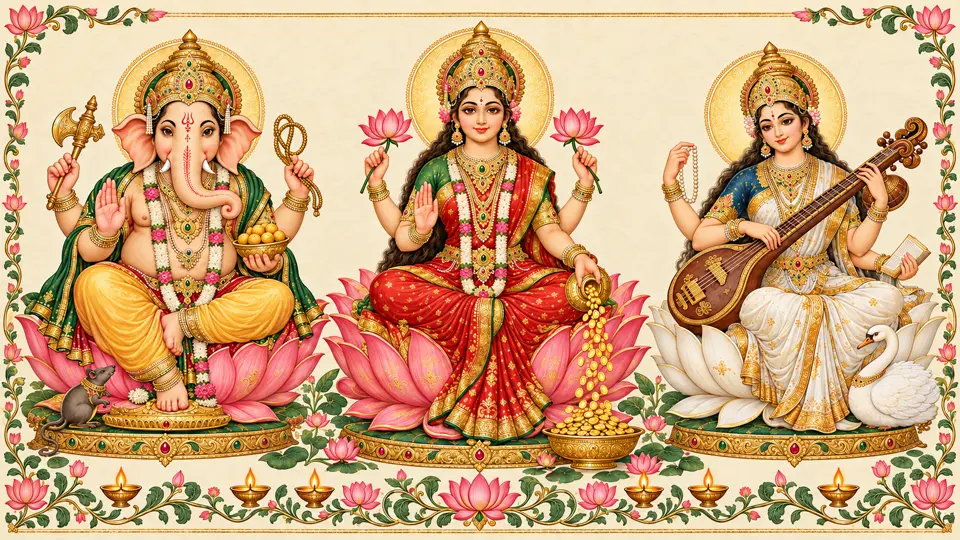
A Diwali pana, made with care.
Original digital devotional artwork of Ganesha, Lakshmi and Saraswati. Choose an A4 or A3 PDF for home printing, or a 4K-size PNG export.
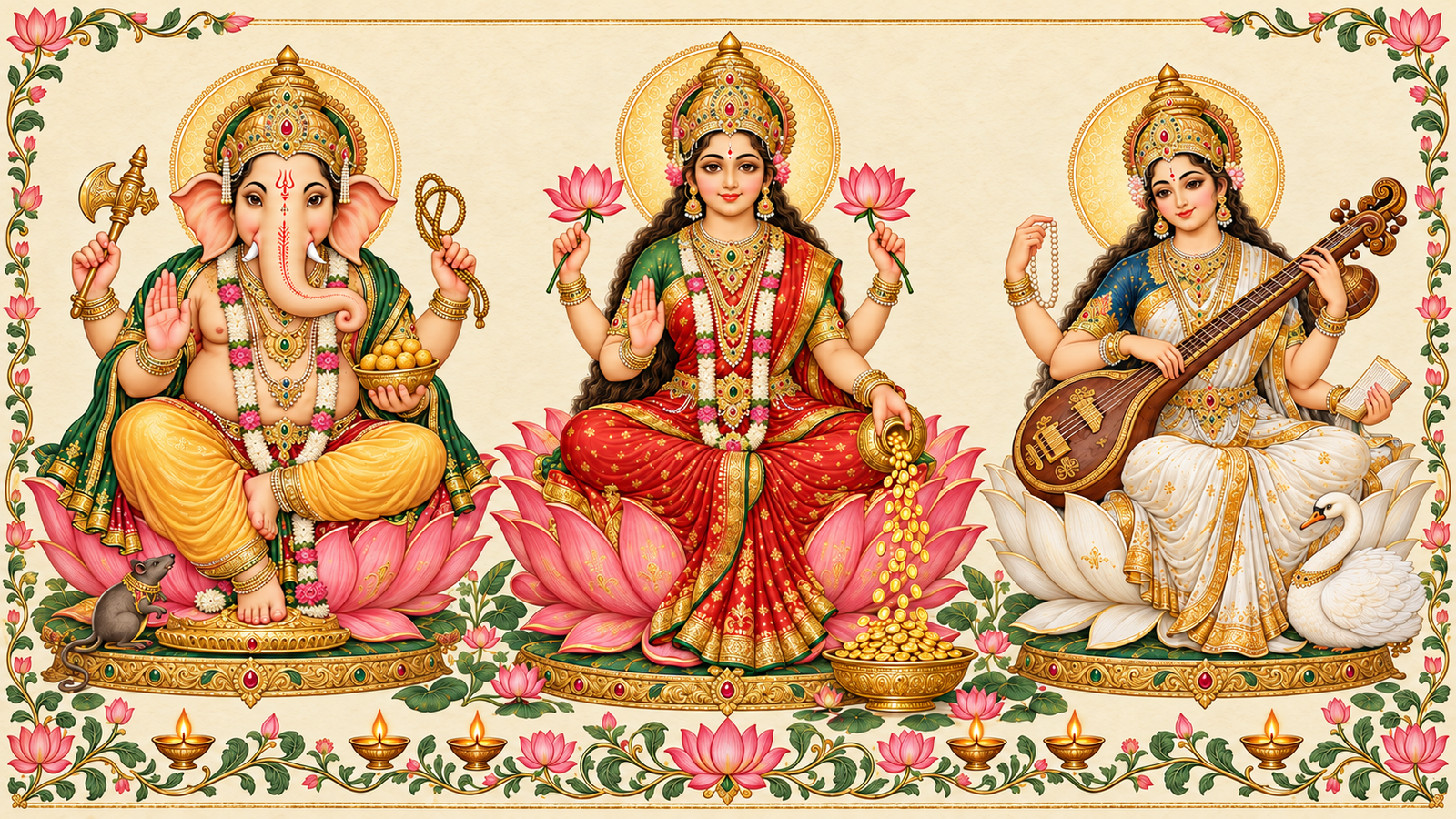
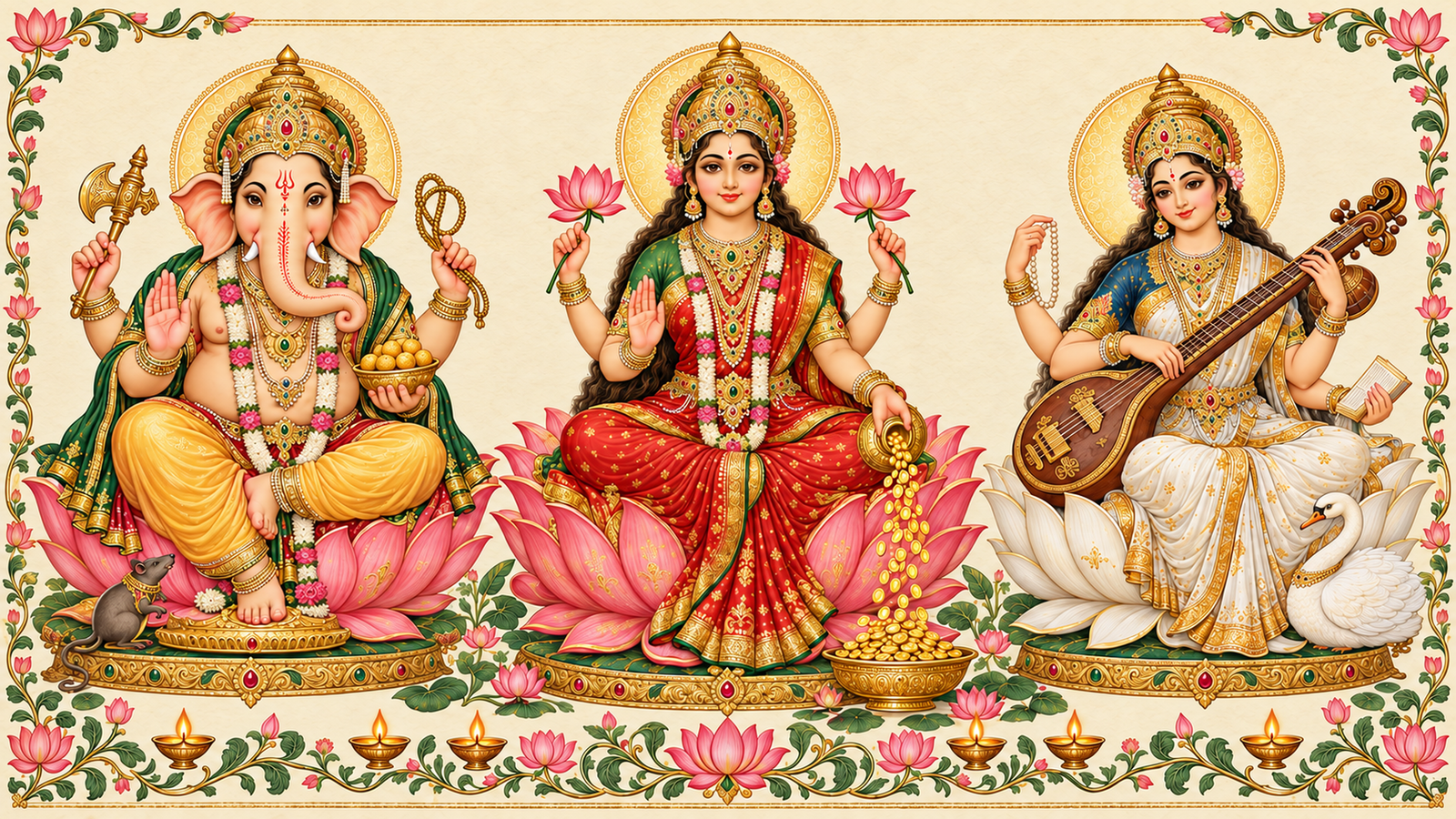
Source artwork: 1672 × 941; 4K export is resampled, not native 4K. Larger prints may appear softer. Landscape paper · Choose “Fit to printable area” and avoid cropping. AI-assisted artwork; qualified religious / iconographic review pending.
The spirit of the festival
Diwali is celebrated as a festival of lights. Many Hindu families observe it with Lakshmi worship, lamps, rangoli and sweets. The BAPS account connects it with goodness and the light of understanding. Stories, observances and ritual sequences differ across regions. The preparation below is a general aid, not a complete Vedic or tradition-specific ritual manual.
उत्सव का भाव
दीपावली प्रकाश के उत्सव के रूप में मनाई जाती है। कई हिंदू परिवार लक्ष्मी पूजा, दीप, रंगोली और मिठाई के साथ उत्सव मनाते हैं। बीएपीएस परंपरा का विवरण इसे अच्छाई और ज्ञान के प्रकाश से जोड़ता है। सभी क्षेत्रों की कथाएँ, दिन और पूजा-विधियाँ एक जैसी नहीं हैं। नीचे दी तैयारी एक सामान्य सहायता है, संपूर्ण वैदिक या किसी संप्रदाय की पूजा-पद्धति नहीं।
Preparing at home
Ask about your household tradition before choosing the space, readings and materials. Check what you already have; if needed, obtain lamps, wicks, oil or ghee, flowers, fruit and prasad from a shop of your choice. Do not assume that costly purchases are necessary. Place lamps on a stable, safe surface and do not leave flames unattended. Open your chosen reading beforehand; if using a download, test it with the internet switched off.
घर की तैयारी
अपने परिवार की परंपरा पूछें और उसी के अनुसार स्थान, पाठ तथा सामग्री चुनें। पहले घर में उपलब्ध चीजें देखें; आवश्यक हो तो दीप, बाती, तेल या घी, फूल, फल और प्रसाद अपनी पसंद की दुकान से लें। बड़ी खरीदारी आवश्यक मानकर न चलें। दीप को स्थिर, सुरक्षित सतह पर रखें और जलता दीप अकेला न छोड़ें। साथ में पढ़ने के लिए पाठ पहले खोल लें; डाउनलोड सुविधा उपयोग कर रहे हों तो इंटरनेट बंद करके उपलब्धता जाँच लें।
Confirming ritual and timing
For a specific ritual, consult a knowledgeable family member or qualified priest in your tradition about the full sequence. A muhurat published for another city may not apply to your location. This version does not take ritual bookings or payments. Priest-led services and a detailed reviewed ritual manual belong to a later phase.
विधि और समय की पुष्टि
विशेष पूजा करना चाहें तो परिवार के ज्ञानी सदस्य या अपनी परंपरा के योग्य पुरोहित से पूरी विधि समझें। किसी दूसरे शहर का मुहूर्त अपने स्थान के लिए सही न मानें। यह संस्करण पूजा बुकिंग या भुगतान नहीं लेता। पुरोहित द्वारा सेवा और विस्तृत, समीक्षित पूजा-पुस्तिका बाद के चरण की तैयारी हैं।